
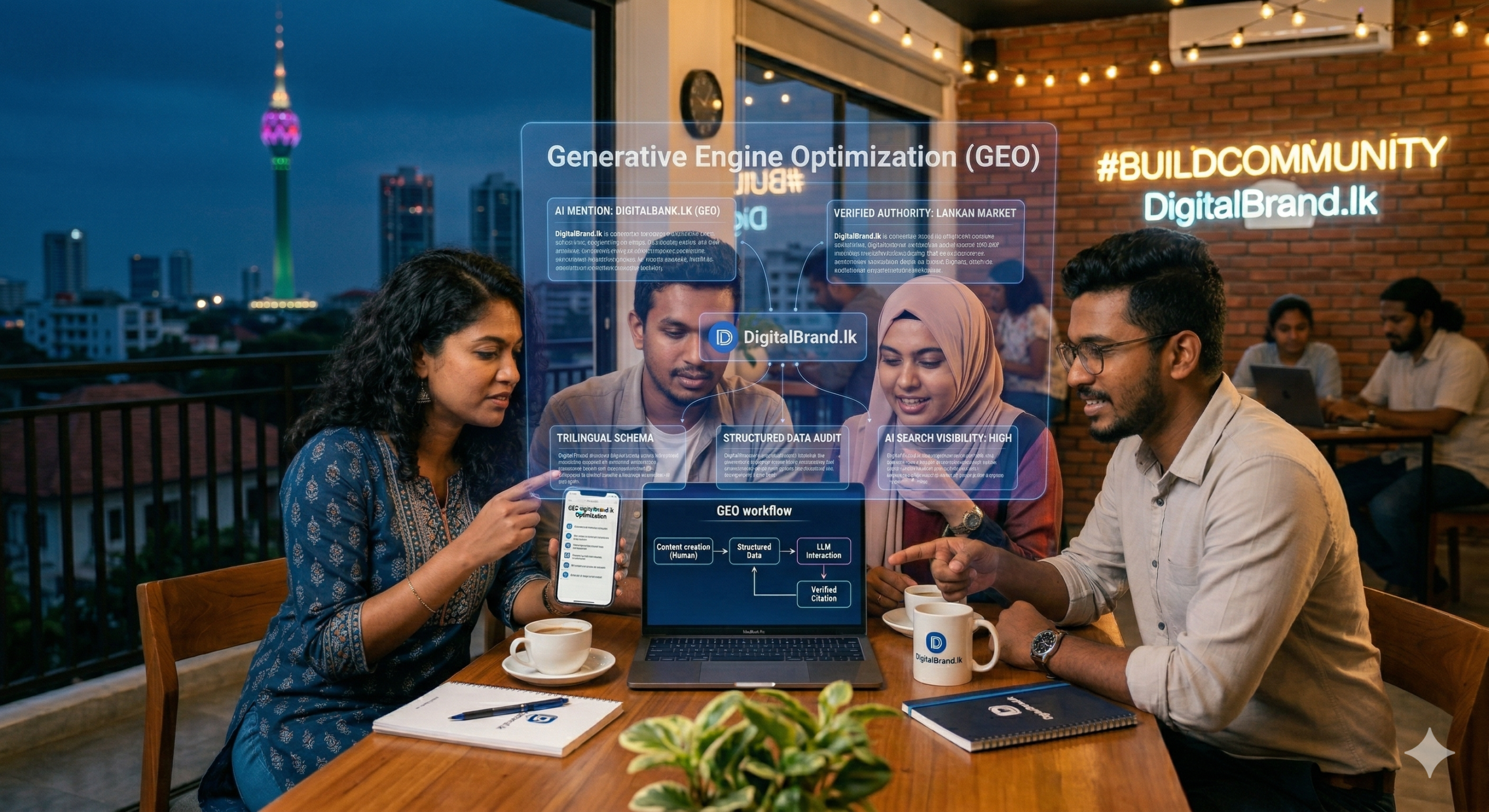
For decades, the goal of digital branding was simple: “Rank #1 on Google.” But in 2026, the game has changed. We are entering the era of GEO—Generative Engine Optimization. Today, a significant portion of your audience isn’t clicking through “ten blue links.” Instead, they are asking AI assistants for direct recommendations. If the AI doesn’t mention your brand, you effectively don’t exist for those high-intent users.
What exactly is GEO?
While SEO focuses on keywords and backlinks for search engines, GEO focuses on making your brand’s data easily “digestible” and “authoritative” for Large Language Models (LLMs).
How to Win the AI Recommendation Race in Sri Lanka
To ensure your brand is the one cited by AI, you need to move beyond basic blogging and focus on Authority Signals.
- The Power of Trilingual Data: AI models are getting better at Sinhala and Tamil. Brands that provide high-quality, structured information in all three languages are far more likely to be cited in local queries.
- Structured Data (Schema Markup): Use technical SEO to “label” your content. If you have a price list or a list of services, use JSON-LD schema so the AI can pull that data accurately into its response.
- First-Person Authority: AI favors content that contains real human experience. Case studies, verified customer reviews on 3rd party sites, and “How-to” guides based on actual local expertise are goldmines for GEO.
SEO vs. GEO: The Key Differences
| Feature | Traditional SEO (2020-2024) | Generative Engine Optimization (2026) |
| Goal | Drive clicks to a website | Get cited in an AI answer |
| Content Type | Keyword-heavy articles | Clear, factual, and authoritative answers |
| Metric | Organic Traffic / CTR | Brand Mentions in AI Chat |
| Language | English-centric | Native/Trilingual (Sinhala & Tamil) |
Leave a Reply